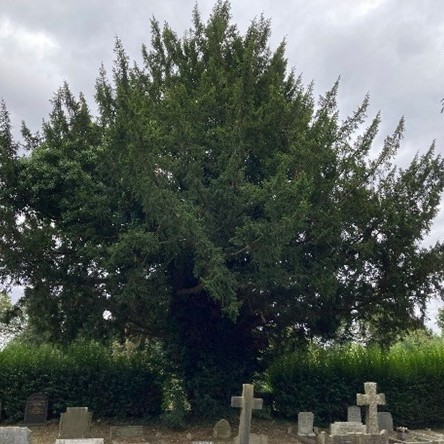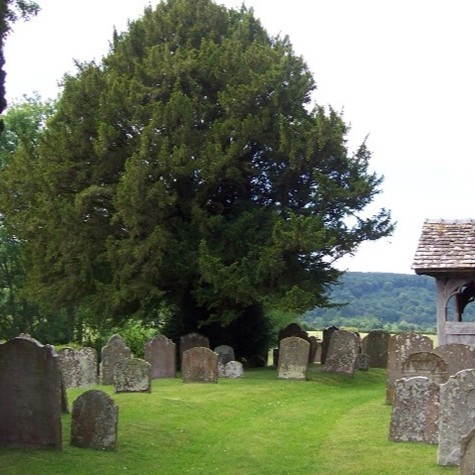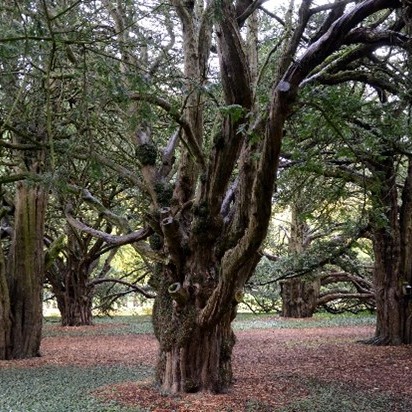
Magnificent ancient and veteran yew trees epitomise the British churchyard and their significance cannot be overstated. They instil in us a sense of awe and wonder when we think of the moments in history they have witnessed.
The environmental charity Caring for God’s Acre, which focusses on biodiversity in burial grounds, is working in collaboration with the Ancient Yew Group on the second Love your Yew Week, running from 9 - 15 February. A collaboration between conservation charity Caring for God’s Acre and the Ancient Yew Group, this year they are asking custodians of ancient and veteran yews to clear beneath the canopy of their trees.
At an estimated 2,000 to 3,000 years of age, the oldest yew tree in the UK is believed to be the Fortingall Yew in Perthshire, which is so old that its original trunk has long since split and it now resembles several smaller trees. In 1769 its girth was measured at 52 feet, and the spread was so wide that funeral processions would pass through the arch formed by the split trunk.
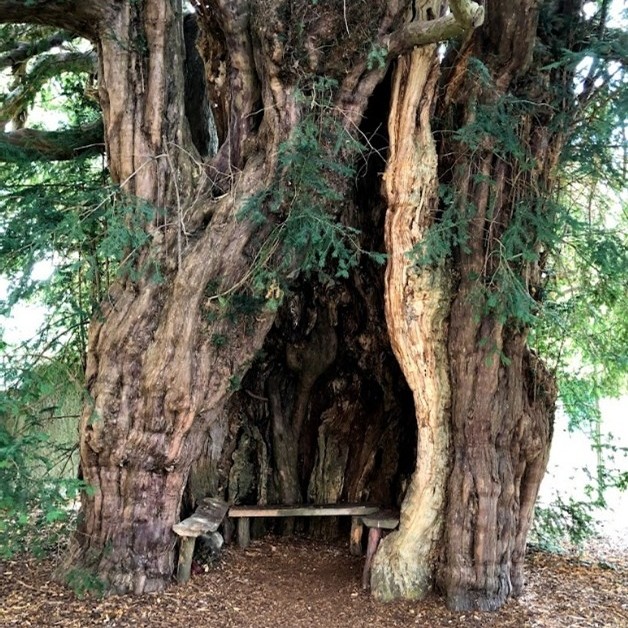
Yew trees are said to have sheltered Robert the Bruce after he fled across Loch Lomond with 200 of his men after the battle of Methven in 1306. It was beneath the branches of a yew that the Magna Carta was sealed and possibly the same yew was the meeting place where Henry VIII wooed the young Anne Boleyn. Ancient yews are frequently hollow and seats and even a lectern can be found inside their hollow trunks.
Globally, veteran and ancient yews are threatened, however English and Welsh churchyards serve as the best refuges for these magnificent trees. It is here that over three quarters of Britain’s oldest yew trees can be found and they are known to have occupied ancient burial sites as far back as the Neolithic period. In Scotland, ancient Yews are mainly found outside of churchyards. It is also thought that they are associated with Druidic sites of worship. To the Celts yews were sacred trees, symbolic of death and resurrection. This belief may stem from the fact that drooping branches of old trees can root and form new trunks where they touch the ground.
In Love Your Yew Week a specific management task is suggested for those churchyards lucky enough to contain an ancient or veteran yew, with the aim of breaking down the job of caring for them into achievable tasks. February is a good time of year to carry out any work on yew trees, before birds are nesting and hopefully a time of year that is not too busy with other tasks. Those who take part are sent a certificate which celebrates these remarkable trees, and which can be displayed to let the public know there is a special tree present.
In 2026 custodians of ancient and veteran yews are being asked to look down at the ground beneath their yew tree and to clear beneath the canopy, removing all objects, including at least a metre beyond the canopy, as the roots can extend further than the branches.
Harriet Carty, Director of Caring for God’s Acre says
“It’s great to have the opportunity to celebrate not only these wonderful trees but also the fabulous volunteers who care for the year after year.”
Chris Knapman from the Ancient Yew Group says:
"The British Isles are of international importance for ancient yew trees. The careful management of their surroundings, to prevent physical harm and to preserve their aesthetic value is valuable stewardship."
- Find out how to take part in Love your Yew Week
- Caring for God’s Acre www.caringforgodsacre.org.uk
- Ancient Yew Group www.ancient-yew.org